
Pinellas Park Address History Sources
A search for previous residents of a Pinellas Park address spans several eras and several custodians. The current parcel roll supplies a starting owner, situs address, legal description, parcel number, and last-deed link. The Pinellas County Clerk then carries the ownership trail back through recorded instruments. Occupancy takes different evidence. Polk street listings, federal census schedules, newspaper notices, and obituary indexes can place people at or near the address without making them owners.
| Record source | Verified span | Custodian | Useful evidence |
|---|---|---|---|
| PCPA and city GIS | Current roll and viewer | Property Appraiser and city | Owner, situs, mailing address, legal description, deed reference |
| Official records | 1912 to present index | Pinellas County Clerk | Deeds, grantors, grantees, recording dates, plats |
| Polk directories | 1915 onward, with verified gaps and later samples | FamilySearch, libraries, archives | Names, addresses, work, spouses, phones, street listings |
| Federal census | Public schedules through 1950 | National Archives and library databases | Household members and relationships |
| City permits | Current online span, earliest year unverified | Pinellas Park Building Development | Project, applicant, inspection, and alteration chronology |
Start with the record nearest the target date. For a recent sale, use the Clerk because new deeds can reach its system before the appraisal roll updates. For a mid-century household, begin with an address-first Polk page and then compare the nearest census. Before 1912, the jurisdiction changes: Pinellas County did not yet exist, so earlier title evidence may sit in Hillsborough County records.
Start Pinellas Park Previous-Resident Research
The Pinellas County Property Appraiser Quick Search accepts an address, owner name, parcel ID, or subdivision. Copy the parcel ID, exact legal description, subdivision, block, lot, last deed, and official-record book and page. The situs address identifies the land. The mailing address is where tax notices go, and it may belong elsewhere. Matching addresses support an owner-occupancy theory, but they do not name all household members.
The parcel page is an index point, not a complete history. Recent deeds may take about two weeks to appear on the Clerk site and roughly two more weeks to reach the Property Appraiser. Search the Clerk first when a transaction is new. Protected owners may have their names and deed references hidden while parcel, legal, sales, land, and building facts remain visible. Respect that safety boundary.
Open the Property Appraiser search guidance before changing an address string. Its advice favors a street number, street name, and standard suffix abbreviations. When the modern wording fails, search the legal description rather than guessing at an old street name.
Walk Pinellas County Deeds Backward
The Pinellas County Clerk official-records index begins in 1912 and supports searches by name, instrument number, document type, record date, consideration, book and page, case number, and legal description. A deed identifies the person transferring an interest and the person receiving it. Keep each instrument number, execution date, recording date, and full legal description in a research log.
- Find the present parcel and copy its current owner, last deed, parcel number, and exact legal description.
- Open that deed and identify the grantor, the seller who transferred the interest to today's grantee.
- Search that seller as an earlier grantee. Match the lot, block, subdivision, and legal text before accepting the result.
- Repeat the handoff one instrument at a time. Note gaps, spelling changes, quitclaim deeds, and transfers within a family.
- At the 1912 boundary, ask the Clerk counter for book help and check Hillsborough County sources for an earlier chain.
- Grantor and grantee
- The grantor gives or sells an interest; the grantee receives it.
- Chain of title
- The linked sequence of recorded transfers for the same property.
- Legal description
- The land's lot, block, subdivision, or other formal identity, which is more stable than a street label.
A PDF or TIFF deed image carries more weight than a result row. If an image is unavailable or redacted, call the Clerk at 727-464-7000 or use the public counter at 315 Court Street in Clearwater. Certified copies also come from the Clerk, not from the appraisal map.
Before Pinellas Park Joined Pinellas
The geography matters to previous-resident work. The Florida Association bought land for Pinellas Farms in 1911, when the area was still in western Hillsborough County. Pinellas County split from Hillsborough soon afterward, and Pinellas Park chartered in 1915. A title trail that reaches the beginning of the Pinellas index may therefore continue under another county name.
Use the same legal description, plat references, and party names when crossing that line. Do not treat the lack of a Pinellas result as proof that the land had no prior owner. The modern city boundary can also mislead. Pinellas Park's annexation layer records ordinance dates, former zoning, acreage, and official-record book and page for individual polygons. A parcel now inside the city may have belonged to an unincorporated area when an older event occurred.
Note: County creation and annexation dates explain custody changes, but neither date proves when a household moved into or out of a home.
Keep the Pinellas Park Parcel Constant
Street numbers and road labels are weaker continuity keys than land descriptions. City GIS separates the site address, owner mailing lines, subdivision, block, lot, parcel or STRAP number, official-record book and page, and plat references. Master Address Points split the house number, direction, street name, street type, unit, postal city, and ZIP into separate fields. Those parts help normalize an old abbreviation without forcing it into a modern full string.
No citywide street-renumbering year was verified. Avoid claiming one. If a directory address and current portal disagree, compare cross streets, direction of travel, lot and block, and nearby numbered addresses. A former road name or retired centerline date can be a clue, but the parcel legal and plat remain the safer test.
Pair Pinellas Park Directory Years
Historical occupancy evidence begins with the verified Polk runs that explicitly include Pinellas Park in 1915, 1916, 1918, 1920/21, 1922, 1924, 1925, and 1926. FamilySearch catalogs those regional volumes under St. Petersburg titles. The missing 1917 and 1919 editions are publication gaps, not evidence that previous residents moved away.
The practical flow is short:
- Find the address in the nearest street or criss-cross listing and copy the name exactly.
- Check the alphabetical entry for a spouse, work, initials, and address variation.
- Compare the next available directory year to spot a replacement occupant.
- Pair the sequence with the 1920, 1930, 1940, or 1950 census schedule, as the period allows.
- Use deeds to separate occupancy from ownership and newspapers or probate to explain a departure.
The inspected 1977 Polk street page lists Pinellas Park streets, cross streets, sequential house numbers, occupant or business names, and telephone numbers. It is strong dated evidence of what the publisher found, but it is not a deed and does not list every household member. The collection details belong on the Pinellas Park city directory page.
Pinellas Park Permits Date Change
The Pinellas Park permit portal can add a project and inspection chronology to the address trail. Search by permit number, address, parcel number, permit type, or status. A roof, addition, demolition, or major repair may explain why a home looks different between photographs or maps.
A permit does not prove that the named applicant lived there. Contractors, owners, and representatives can all appear in a file. Request the application and inspection history from Building Development when the public result lacks enough detail. The office is at 6051 78th Avenue North, operates weekdays from 8:00 a.m. to 4:30 p.m., and can be reached at 727-369-5647.
Living Memory of Previous Residents
Records do not always explain how a household used a place. Heritage Village's Power of Place project began collecting oral histories from residents, faith groups, agencies, and long-standing businesses in late 2025. The Heritage Village oral-history announcement shows how personal accounts can add context to the deed and directory trail.
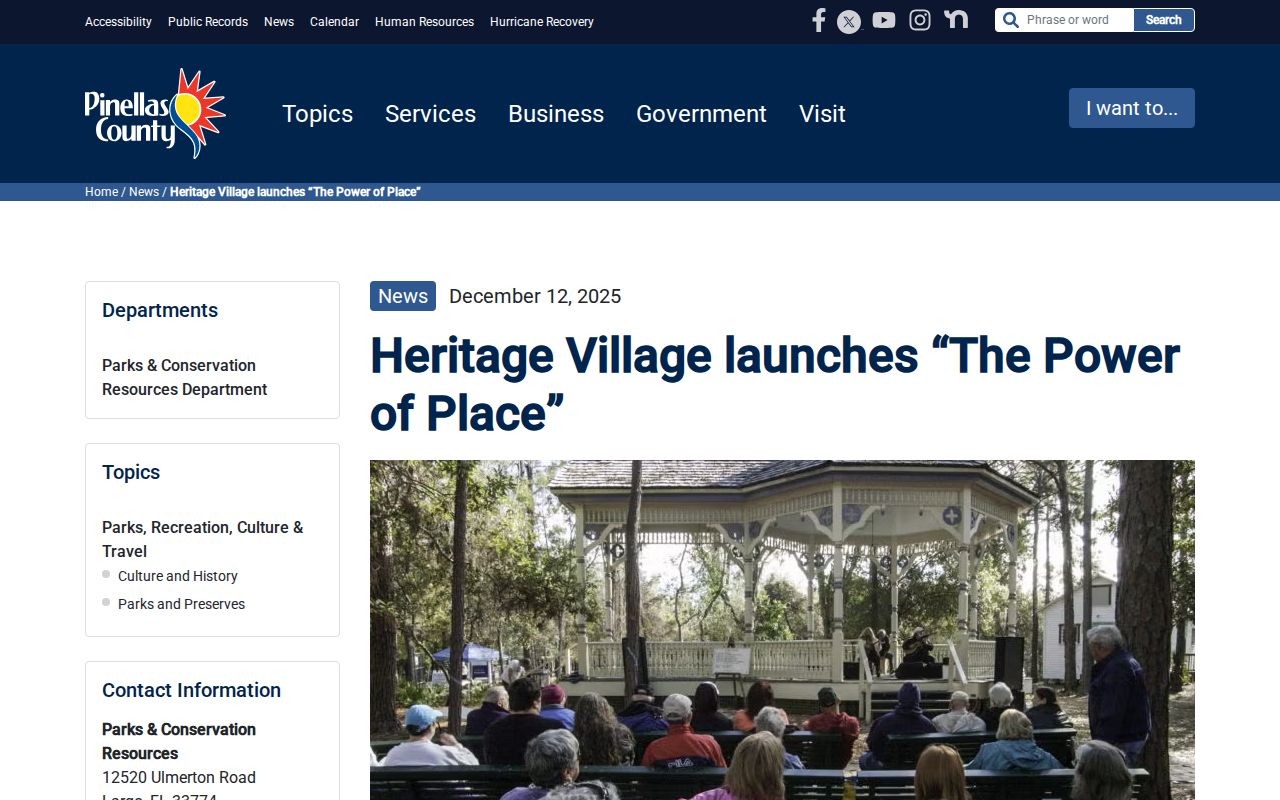
The project is a lead, not proof by itself. Compare names, dates, addresses, photographs, and family claims with official records. The restored Turner Bungalow offers another model: its exhibit draws on thousands of family artifacts, letters, books, and toys to connect people to a home.
The Turner Bungalow collection announcement documents that place-based approach.
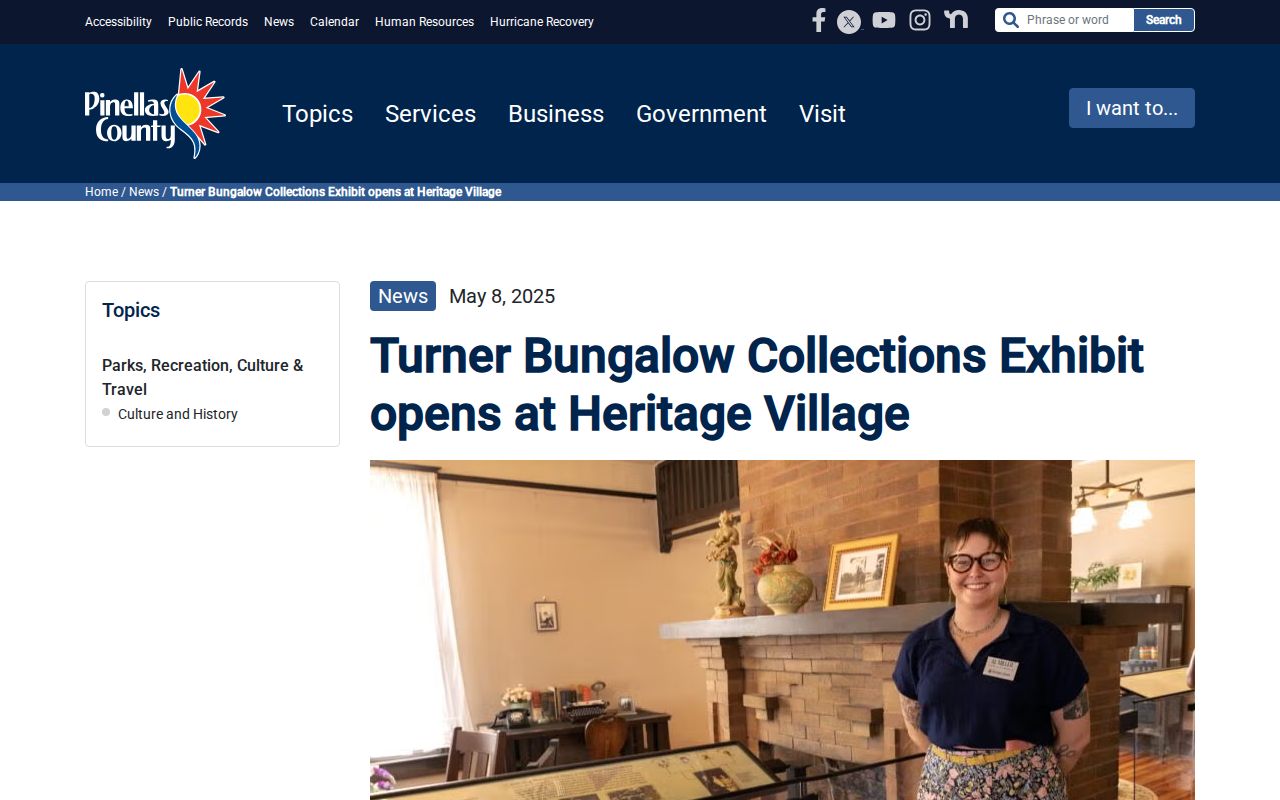
Family papers can fill the human gaps between official entries while their dates and claims still require outside checks.
Archives Beyond the Online Index
When the backward trail leaves modern portals, use the Barbara S. Ponce Library, the Pinellas Genealogy Society, Heritage Village, and the State Archives. The local library provides Ancestry and regional newspaper access. The genealogy society offers a paid per-name research service drawing on cemetery indexes, St. Petersburg Times obituaries, the Florida Death Index, marriage indexes, census indexes, county history, and surname manuscripts.
The Florida State Archives holds government series and manuscripts that may never have entered a web index.
This statewide fallback is especially useful once a search crosses the 1912 county boundary or needs older government context. Ask for a named record series and date span rather than asking staff to research a person.
Close a Pinellas Park Household Trail
Owners are only one part of the story. Census schedules and criss-cross directories can name renters, spouses, children, or other household members at a point in time. Obituaries may identify relatives, affiliations, and former locations. Probate dockets can name heirs and personal representatives, though confidential inventories may be absent. Cemetery indexes provide another date and family link.
Florida marriage and divorce reports can help distinguish people with the same name. The state marriage-certificate service provides public abstracts for its covered years, while the Clerk holds local marriage originals. The divorce-certificate service supplies an abstract, not the full judicial file.
Use the names and event county as cross-checks, then consult the Clerk for the actual local instrument or case if needed.
The linked Florida divorce record instructions distinguish a state abstract from the judicial file.
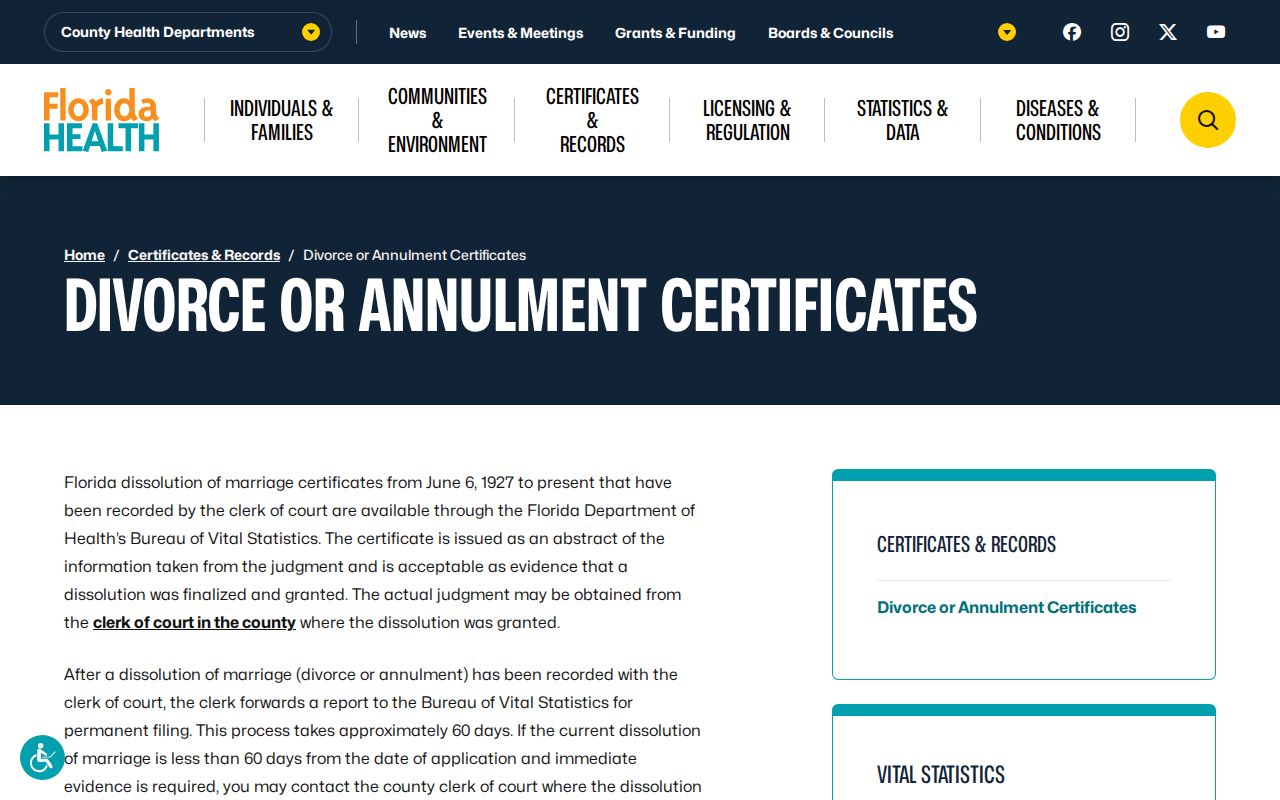
The image reflects the state ordering channel. The Pinellas County Clerk remains the source for pleadings, orders, and docket details that are public.
The Florida death-certificate service may confirm the end of a resident trail. Cause of death remains confidential for fifty years, while a certificate without cause is more broadly available to adults.
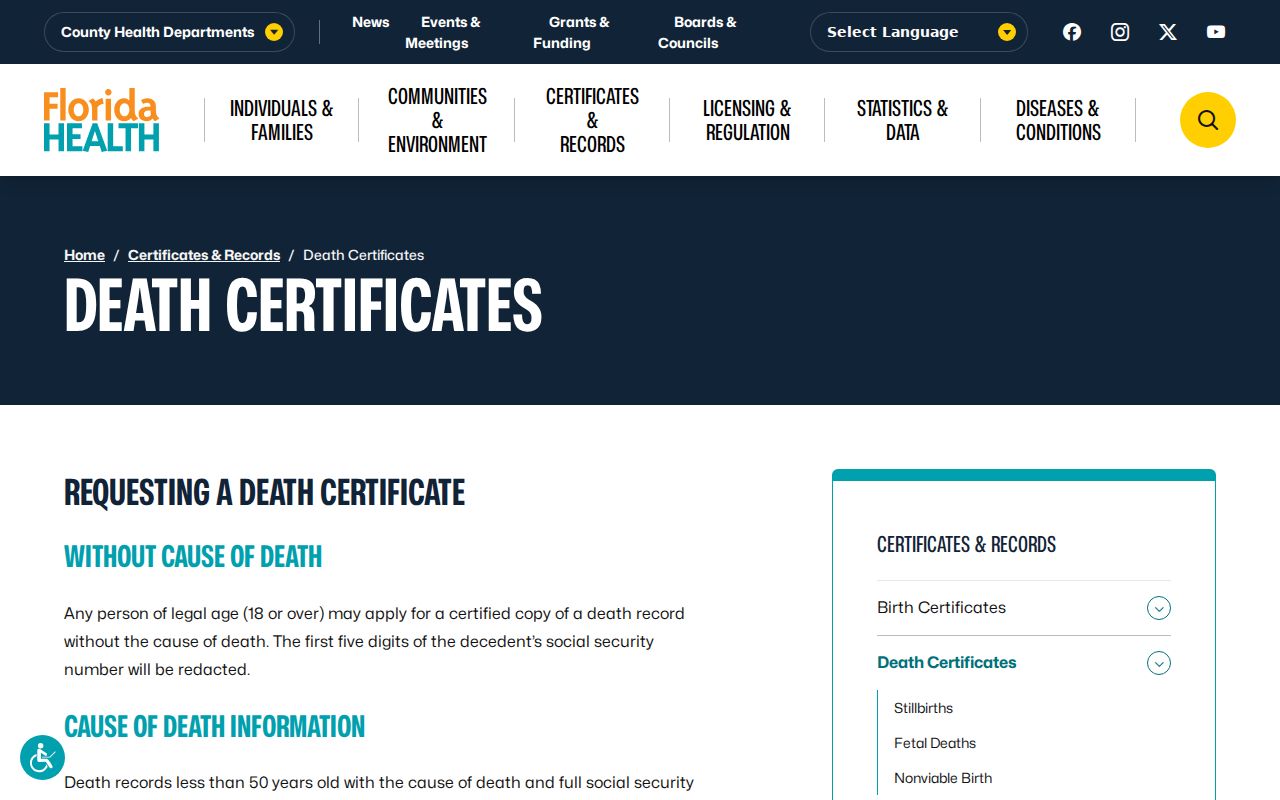
A certificate confirms a vital event within its legal limits. It does not by itself prove that the person occupied the researched address on the event date.
Lawful use. Research previous residents for family history, house history, estate work, or personal curiosity. Never use an address trail to stalk, harass, threaten, or bypass a protected person's safety measures.